Beyond Home Broadband: How 4G and 5G CPE Routers Power Smart Homes, Security Systems, and Backup Int
Introduction
When people think of a 4G or 5G CPE router, home internet access is often the first application that comes to mind. Insert a SIM card, power on the device, and connect to Wi-Fi. It is a flexible alternative to traditional wired broadband.
However, cellular CPE routers are no longer limited to home internet access.
From smart home security systems and IP cameras to temporary retail stores and backup internet connections, 4G and 5G CPE routers provide flexible connectivity for a wide range of applications.
While 4G CPE routers remain attractive for cost-sensitive applications and basic internet access, 5G CPE routers offer higher potential speeds and greater capacity for bandwidth-intensive applications, depending on network conditions and device specifications.
For router brands, distributors, and smart home solution providers, these applications create opportunities to develop differentiated products for different customer needs.
In this article, we explore five practical applications of 4G and 5G CPE routers and explain what to consider when choosing the right solution.
1. Smart Home Connectivity: Connecting More Than Smartphones
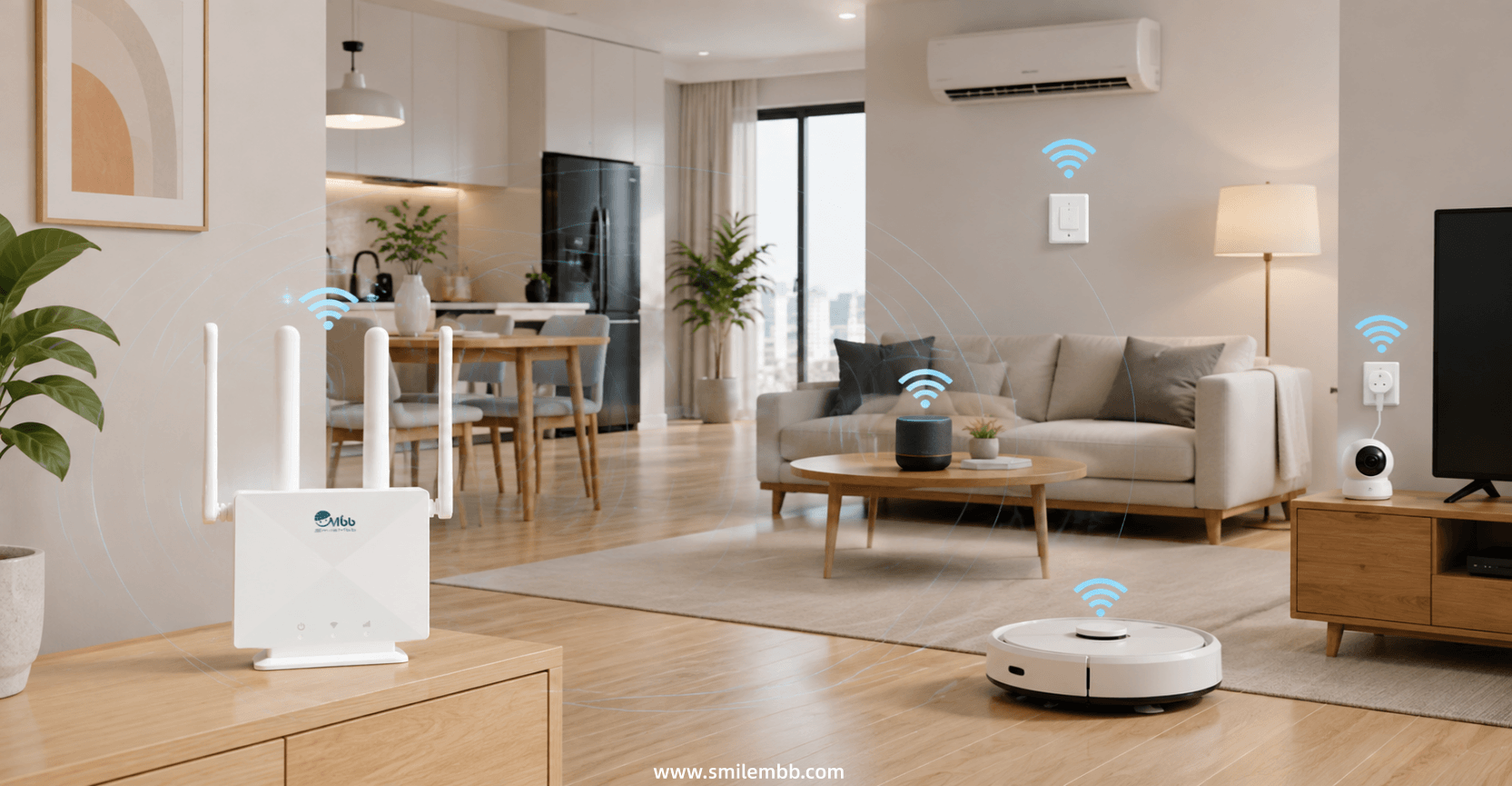
Modern homes increasingly rely on connected devices, including smart plugs, sensors, smart appliances, and home automation systems. Many of these devices depend on a stable internet connection for remote access, notifications, and cloud-based services.
A 4G or 5G CPE router can provide the network infrastructure these devices need, especially in homes without fixed broadband access.
Why use a cellular CPE router for a smart home?
-
Flexible installation: No fixed broadband line is required. Users can connect through a compatible SIM card and cellular network.
-
Multi-device connectivity: Wi-Fi allows compatible smart devices, smartphones, and computers to share the same internet connection.
-
Convenient deployment: A practical option for rental properties, temporary residences, and homes waiting for broadband installation.
-
Flexible network access: The router can be deployed wherever suitable cellular coverage and power are available.
4G or 5G: Which is more suitable?
A 4G CPE router can be a cost-effective solution for everyday smart home connectivity, including sensors, smart plugs, and routine internet access.
A 5G CPE router may be more suitable for homes with higher bandwidth requirements, multiple users, high-resolution streaming, or a growing number of connected devices.
The best choice depends on local network coverage, budget, data plan restrictions, and the expected workload.
For smart home brands, cellular CPE routers can also complement existing products by providing internet connectivity in locations where customers do not have a conventional home network.
2. CCTV and IP Cameras: Connecting Security Systems Without Fixed Broadband
Security cameras are another practical application for 4G and 5G CPE routers.
Residential properties, small shops, temporary sites, farms, and remote buildings may need video monitoring without access to fixed internet services. A cellular CPE router can connect compatible Wi-Fi or Ethernet-based IP cameras to the internet, enabling remote viewing and cloud-connected features when supported by the camera system.
How does it work?
A typical setup involves four steps:
-
Insert a compatible SIM card into the CPE router.
-
Power on the device and establish a cellular internet connection.
-
Connect IP cameras through Wi-Fi or Ethernet, depending on the router configuration.
-
Configure the cameras and monitoring platform for remote access.
What are the advantages?
No fixed broadband installation: Useful for locations where installing a wired connection is difficult or impractical.
Flexible deployment: Suitable for temporary security installations, small commercial premises, farms, and remote buildings with adequate cellular coverage.
Support for different camera types: Depending on the device configuration, a CPE router can connect compatible wired and wireless cameras.
More bandwidth options: A 4G CPE may be sufficient for a small camera installation, while a 5G CPE can be worth considering when several cameras require higher-resolution streaming or greater aggregate bandwidth.
What should buyers consider?
Before selecting a router for CCTV applications, evaluate:
-
Cellular band compatibility and signal quality.
-
Upload bandwidth and the number of cameras streaming simultaneously.
-
Wi-Fi coverage and available Ethernet ports.
-
Mobile data requirements.
-
Compatibility with the camera system and its remote-access method.
The number of supported Wi-Fi devices is not the same as the number of cameras that can stream smoothly at the same time. Actual performance depends on video resolution, compression, upload bandwidth, signal conditions, and usage patterns.
For security applications, selecting a suitable network configuration is just as important as choosing the router itself.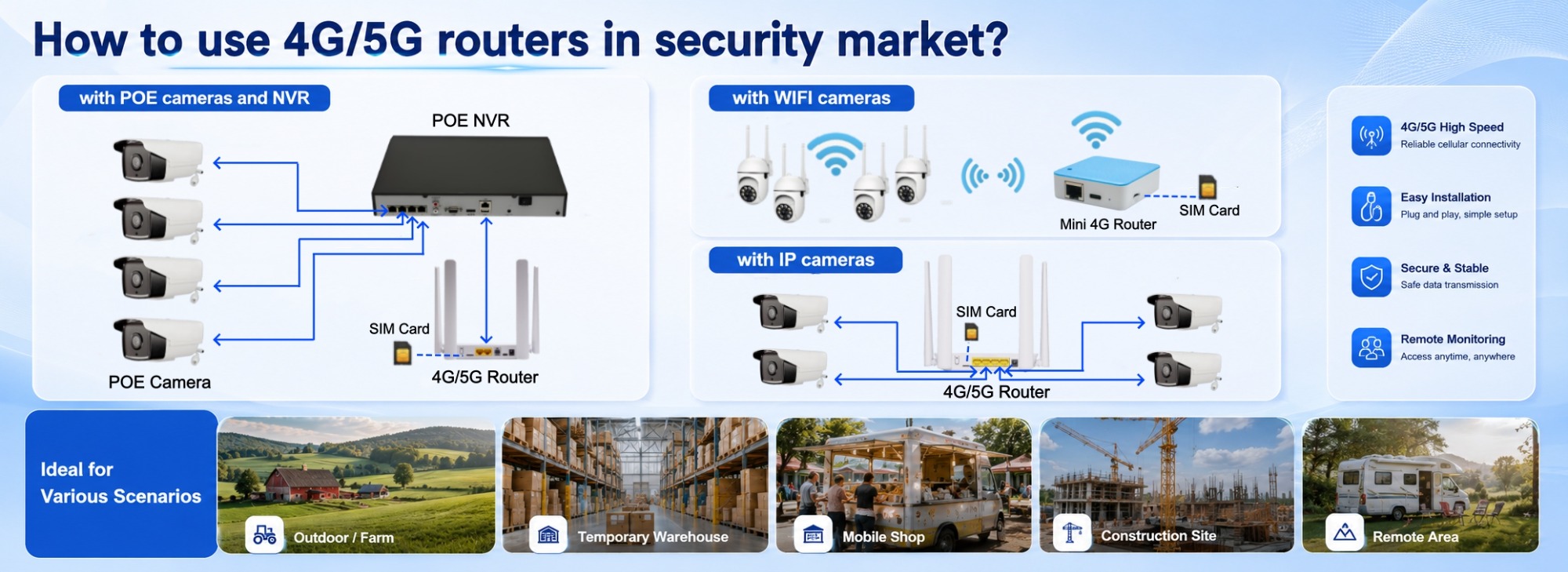
3. Backup Internet: Maintaining Connectivity When the Primary Network Fails
Even when a home or business already has fiber or cable broadband, a backup internet connection can provide an additional layer of connectivity.
Internet interruptions can affect remote work, online transactions, cloud applications, and security systems. A 4G or 5G CPE router can provide an alternative internet source when the primary connection becomes unavailable.
Common backup internet applications
-
Home offices: Maintain an alternative connection for video meetings, email, and essential online work.
-
Small retail stores: Help restore connectivity for cloud-based business systems when the main broadband service fails.
-
Small offices: Provide a secondary internet source for selected devices and essential services.
-
Smart home security: Offer alternative connectivity for compatible security systems.
Can a CPE router automatically switch to backup internet?
Not every 4G or 5G CPE router supports automatic failover.
A standalone cellular CPE can provide an alternative internet connection, but automatic switching generally requires a compatible dual-WAN router, a device with supported failover functionality, or an appropriate network configuration.
Businesses should check whether the solution supports automatic switching, how quickly it recovers, and whether connected applications can resume without manual intervention.
A backup connection also depends on cellular coverage, network availability, power, and any applicable data restrictions. It is an additional connectivity option rather than a guarantee of uninterrupted service.
4. Temporary Shops, Pop-Up Stores, and Mobile Businesses
Not every business operates from a permanent location.
Pop-up shops, seasonal retail outlets, exhibition booths, temporary offices, and mobile businesses often need internet access without committing to a fixed broadband installation.
A 4G or 5G CPE router can help these businesses establish a local network with less installation complexity.
Practical applications
-
Temporary point-of-sale and inventory systems.
-
Exhibition booths requiring connectivity for staff and demonstrations.
-
Seasonal stores and short-term retail locations.
-
Temporary offices and project sites.
-
Mobile businesses operating from changing locations, where suitable power and cellular coverage are available.
For basic internet access and cost-sensitive deployments, a 4G CPE router may be sufficient.
For businesses that rely on bandwidth-intensive cloud applications, frequent large file transfers, or multiple high-demand users, a 5G CPE router may provide additional performance headroom when the local network supports it.
For distributors and e-commerce sellers, this creates an opportunity to position cellular CPE routers as practical business connectivity solutions rather than just home networking products.
5. Rural Homes and Locations Without Wired Broadband
Fixed broadband infrastructure is not equally accessible everywhere. Rural homes, rental properties, holiday homes, and outlying buildings may face installation delays, limited service availability, or high installation costs.
Where suitable cellular coverage is available, 4G and 5G CPE routers can provide an alternative route to internet access.
Choosing between 4G and 5G CPE
4G CPE routers are worth considering when affordability, basic connectivity, and straightforward deployment are the main priorities.
5G CPE routers may be more attractive when users need higher download speeds, greater bandwidth capacity, or a more capable alternative to fixed broadband.
The actual experience depends on factors such as cellular signal strength, network congestion, supported frequency bands, the operator's service, and the router's hardware capabilities.
A 5G router does not automatically guarantee faster internet in every location. In areas with weak 5G coverage or a congested network, the real-world performance difference may be smaller than expected.
Before deployment, users should check local coverage, operator compatibility, data plan restrictions, and the expected number of connected devices.
How to Choose the Right 4G or 5G CPE Router
Different applications have different connectivity requirements. The right product should match the actual workload, deployment environment, and target budget.
| Application | Key requirements |
|---|---|
| Smart home | Wi-Fi coverage, device capacity, stable connectivity |
| CCTV and IP cameras | Upload performance, Ethernet/Wi-Fi options, cellular reception |
| Backup internet | Network compatibility and failover requirements |
| Temporary retail | Easy installation, reliability, suitable LAN ports |
| Rural internet access | Supported cellular bands, signal quality, appropriate data plan |
| High-bandwidth home networking | 5G capability, Wi-Fi performance, sufficient network capacity |
Other considerations include antenna design, power requirements, firmware features, Ethernet port configuration, thermal performance, and long-term reliability.
For businesses developing their own router brands, the objective is not simply to select the fastest device. It is to choose a configuration that fits the intended market.
An affordable 4G CPE may be the right fit for entry-level applications, while a 5G CPE may be better suited to markets where users are willing to pay for higher performance.
Why 4G and 5G CPE Routers Create Opportunities for OEM/ODM Brands
As cellular connectivity expands beyond traditional home broadband, router brands have more opportunities to develop products for specific customer groups.
These include smart home brands adding connectivity products to their portfolios, CCTV suppliers offering networking accessories, distributors building their own router brands, and broadband solution providers seeking alternative connectivity options.
OEM/ODM development allows businesses to explore different product configurations, branding options, and market positioning based on their commercial requirements.
SmileMBB specializes in 4G/5G CPE routers and MiFi devices, supporting product customization for brands and distributors.
For example, the XMC1842 Super Mini 4G CPE Router offers LTE Cat 4 connectivity, Wi-Fi, Ethernet, USB Type-C power input, and a compact design without an internal battery. It can be considered for selected entry-level connectivity applications where its specifications match the intended use.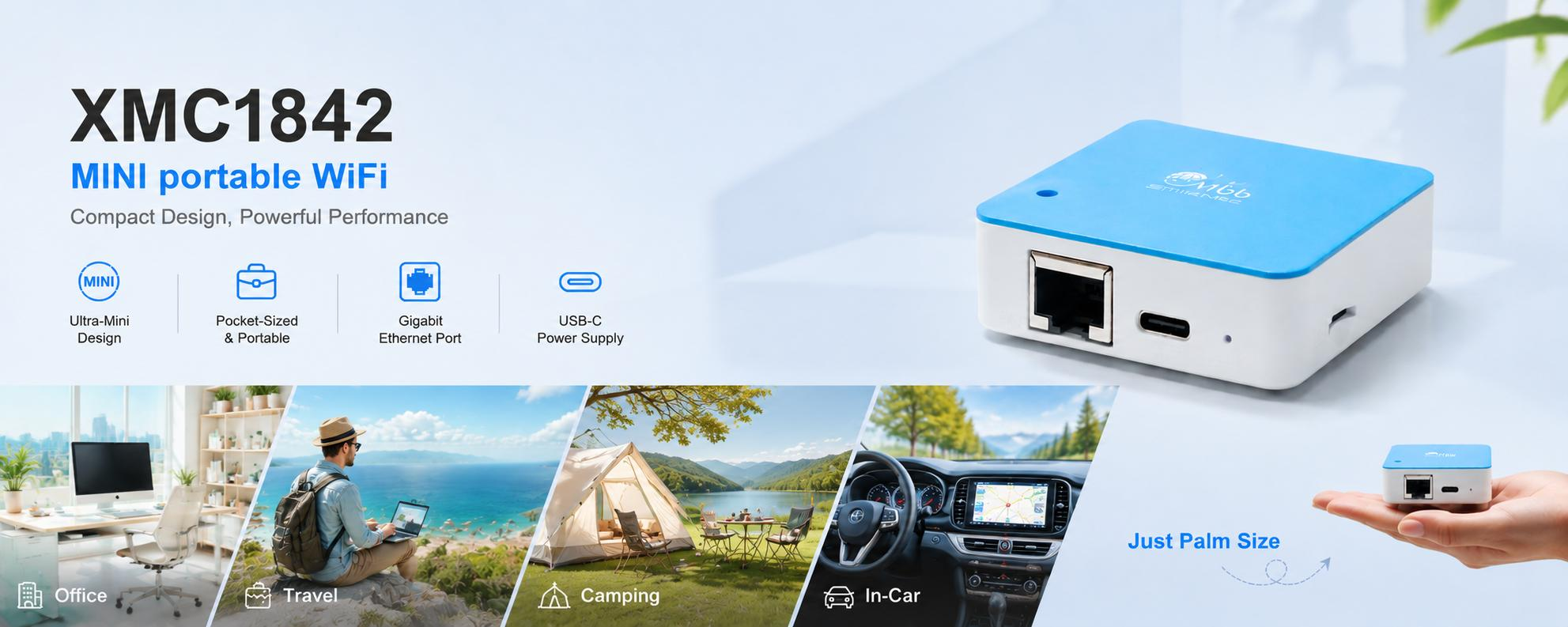
For projects requiring higher cellular performance, SmileMBB also offers 5G CPE product options. The appropriate model depends on the required network performance, interfaces, supported bands, and target price.
The key is to select a product based on the end application rather than assuming that one router configuration suits every market.
Conclusion: One Connectivity Category, Multiple Market Opportunities
4G and 5G CPE routers are no longer limited to replacing traditional home broadband.
Smart home connectivity, CCTV systems, backup internet, temporary retail, and rural internet access all demonstrate how cellular networking can address different connectivity challenges.
For end users, the value lies in flexible deployment and access to the internet where fixed broadband may not be practical.
For brands and distributors, these applications create opportunities to reach new customer groups, develop targeted products, and differentiate their offerings.
The most suitable solution is not always the most expensive or technically advanced router. It is the one that matches the application, network conditions, and target market.
Looking for a 4G or 5G CPE router for your next product line?
SmileMBB provides 4G/5G CPE routers and MiFi devices, with OEM/ODM options for brands and distributors.
Contact our team to discuss your target application, technical requirements, and customization needs.
Explore SmileMBB's 4G/5G CPE router portfolio or contact us to discuss your OEM/ODM project.