MiFi vs. Mini CPE vs. Traditional CPE: Which Device Fits Which Scenario?
As mobile connectivity and Fixed Wireless Access (FWA) continue to expand, users have more choices than ever when it comes to accessing the internet through cellular networks.
MiFi devices, Mini CPE routers, and traditional CPE routers all provide wireless connectivity, but they are designed for different applications. Some prioritize portability, others offer a compact solution for everyday connectivity, while traditional CPE devices are often designed for more comprehensive home and office networking.
For consumers, businesses, and connectivity product brands, understanding these differences is essential to choosing the right device.
In this guide, we compare MiFi, Mini CPE, and traditional CPE routers in terms of design, connectivity, features, and applications to help you identify the best solution for your market.
1. What Is a MiFi Device?
A MiFi is a portable mobile hotspot that connects to a cellular network and shares the internet connection with nearby devices through Wi-Fi.
Most MiFi devices feature a built-in rechargeable battery, allowing users to access the internet without a permanent power connection. Their compact size makes them convenient for travel, outdoor activities, and temporary internet access.
Key Features of MiFi
-
Portable design: Small and lightweight for easy transportation.
-
Battery-powered operation: Many models support internet access without a fixed power supply.
-
Wireless connectivity: Connect smartphones, tablets, laptops, and other Wi-Fi-enabled devices.
-
Simple installation: Usually requires only a SIM card and a supported cellular network.
-
Flexible applications: Suitable for mobile users and locations without fixed broadband.
Common Applications
MiFi devices are particularly suitable for:
-
Business travelers and remote workers.
-
Students and mobile internet users.
-
Temporary offices and work sites.
-
Travel connectivity and outdoor activities.
-
Backup internet access when a fixed connection is unavailable.
Limitations of MiFi
Portability comes with certain trade-offs.
Battery capacity determines how long a device can operate between charges. The compact housing can also limit antenna size, thermal design, and the number of physical interfaces.
Most importantly, MiFi devices are designed primarily for mobile connectivity rather than serving as a comprehensive fixed home networking solution.
Best for: Users who prioritize portability, battery-powered operation, and convenient internet access on the go.
2. What Is a Mini CPE Router?
A Mini CPE router is a compact cellular networking device that provides internet access through a mobile network and distributes the connection through Wi-Fi and, depending on the model, Ethernet.
Unlike a typical battery-powered MiFi, many Mini CPE devices are designed for continuous operation using an external power adapter. Some models can also support battery-powered operation.
Mini CPE products offer an alternative for users who need more installation flexibility or wired connectivity without the size of a traditional router.
Key Features of Mini CPE
-
Compact form factor: Easy to place on a desk, shelf, or in a small installation space.
-
Cellular connectivity: Supports 4G LTE or other cellular technologies, depending on the model.
-
Wi-Fi and Ethernet: Selected models provide both wireless and wired network access.
-
Flexible power options: Many models use external power supplies, while battery options depend on the product design.
-
Cost-conscious design: Can offer a practical balance between functionality, size, and product cost.
Common Applications
Mini CPE routers can be used in a variety of scenarios.
Small homes and apartments
A Mini CPE can provide internet access where users need a simple wireless connection without a large router.
CCTV and smart-home systems
A model with a compatible Ethernet port can connect to a network video recorder or another wired device. Its Wi-Fi function can also serve compatible wireless cameras and smart-home devices.
The number of cameras a device can support depends on Wi-Fi capacity, cellular bandwidth, camera bitrate, and network configuration.
Small shops and retail terminals
Mini CPE devices can provide connectivity for point-of-sale terminals, computers, and other compatible equipment.
Backup internet
Businesses and households can use cellular connectivity as an alternative connection when their primary broadband service is unavailable, provided the device and network configuration support their requirements.
E-commerce and consumer networking markets
Their compact size and practical feature set can make Mini CPE devices attractive to brands and sellers targeting customers who want a simple, affordable connectivity solution.
Limitations of Mini CPE
A compact design generally means fewer interfaces and less internal space than a traditional CPE.
Depending on the model, a Mini CPE may have fewer Ethernet ports, less flexibility for antenna configurations, and fewer hardware expansion options.
It may therefore be less suitable for installations requiring many wired connections or specialized networking functions.
Best for: Users who need a compact, versatile, and cost-conscious connectivity solution for homes, small businesses, CCTV, and backup internet.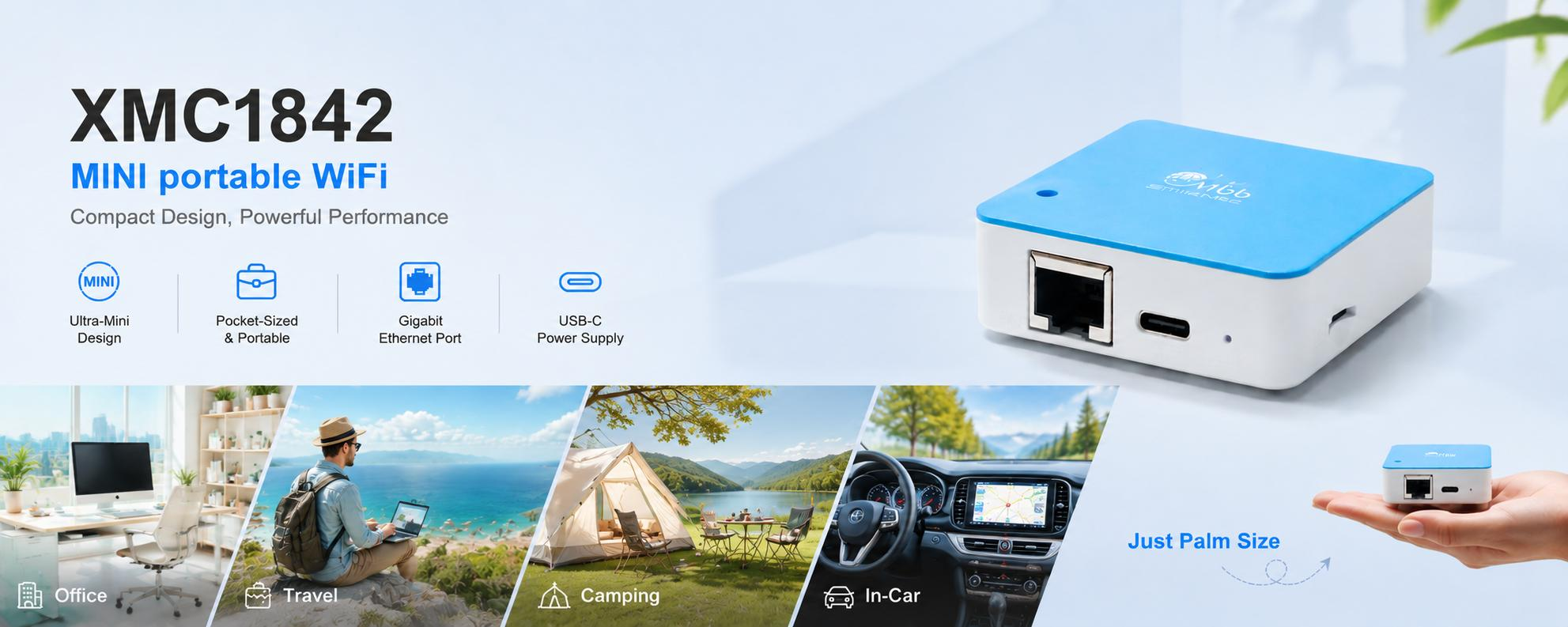
3. What Is a Traditional CPE Router?
A traditional Customer Premises Equipment (CPE) router is a device installed at a customer's premises to provide network connectivity.
In the cellular networking market, 4G and 5G CPE routers use mobile networks to deliver internet access to homes, offices, and businesses. They are also widely associated with Fixed Wireless Access (FWA).
Compared with MiFi and Mini CPE devices, traditional CPE routers often provide more flexibility in antenna design, interfaces, and wireless networking configurations.
However, actual capabilities vary considerably between models.
Key Features of Traditional CPE
-
Flexible antenna design: Depending on the product, antennas may be internal, external, or integrated into a more specialized design.
-
Multiple Ethernet ports: Many models support several wired network connections.
-
Flexible Wi-Fi configurations: Available with different Wi-Fi standards, frequency bands, and performance levels.
-
Fixed installation: Designed primarily for continuous use in homes, offices, and other stationary locations.
-
Multiple cellular options: Available in different LTE categories and 5G configurations.
Common Applications
Home broadband
4G and 5G CPE routers can provide household internet access through cellular networks without requiring a wired broadband connection at the premises.
Fixed Wireless Access
FWA allows operators and internet service providers to deliver broadband services using wireless networks. CPE devices connect the cellular network to users' home or office networks.
Small offices and commercial environments
Depending on their specifications, traditional CPE routers can connect computers, smart TVs, payment terminals, surveillance equipment, and other wired or wireless devices.
Higher-demand connectivity scenarios
Some models offer more advanced cellular capabilities, multiple Ethernet ports, enhanced Wi-Fi configurations, or support for more demanding network requirements.
Limitations of Traditional CPE
Traditional CPE routers are generally less portable than MiFi and compact Mini CPE devices.
Depending on their specifications, they may also have higher hardware costs and require more installation space.
A larger device does not automatically provide better connectivity. Cellular frequency bands, signal quality, antenna performance, network congestion, and Wi-Fi configuration all influence the user experience.
Best for: Home broadband, fixed wireless access, and users who need a more comprehensive networking solution.
4. MiFi vs. Mini CPE vs. Traditional CPE: Key Differences
The following table summarizes the main differences between the three device categories.
| Feature | MiFi | Mini CPE | Traditional CPE |
|---|---|---|---|
| Primary purpose | Mobile connectivity | Compact fixed or semi-mobile connectivity | Fixed broadband connectivity |
| Portability | Excellent | Good | Generally limited |
| Built-in battery | Common | Model-dependent | Less common |
| Ethernet connectivity | Model-dependent | Available on selected models | Common on many models |
| Number of Ethernet ports | Often limited | Usually limited | Often more |
| Antenna design flexibility | Constrained by compact size | Depends on design | Generally greater |
| Typical installation | Mobile use | Desk, shelf, or small installation space | Home or office |
| Common applications | Travel, mobile work | CCTV, small homes, backup internet | Home broadband, FWA, offices |
| Main consideration | Battery life and portability | Size, cost, and connectivity options | Performance, interfaces, and installation needs |
These are general product-category characteristics rather than universal specifications. Actual features depend on the design of each device.
5. How to Choose the Right Device for Different Applications
Choosing the right device starts with understanding how and where it will be used.
Scenario 1: Mobile Internet for Travelers
For travelers, business users, and people who frequently move between locations, MiFi is often the most convenient option.
Its battery-powered design and compact size make it suitable for connecting multiple devices while traveling.
If users need Ethernet connectivity or plan to leave the device operating continuously in one location, however, a Mini CPE may be worth considering.
Scenario 2: Affordable Internet for Small Homes
For users who need basic home internet without many wired connections, Mini CPE can offer a practical balance between size, functionality, and cost.
It may be particularly attractive in markets where consumers are sensitive to device prices but still expect Wi-Fi connectivity and at least one Ethernet interface.
Traditional CPE may be more appropriate when users require more interfaces or a broader set of networking features.
Scenario 3: CCTV and Smart-Home Connectivity
CCTV and smart-home applications require more than a cellular connection.
Before selecting a device, consider:
-
The number of connected cameras and other devices.
-
Whether wired Ethernet is required.
-
Wi-Fi coverage and supported wireless standards.
-
Total bandwidth requirements.
-
Continuous power availability.
-
Local cellular coverage and signal quality.
A Mini CPE may be suitable for smaller installations, while a traditional CPE may be preferable when more wired connections or broader networking capabilities are required.
The best choice depends on the actual network design rather than the device category alone.
Scenario 4: Home Broadband and Fixed Wireless Access
For home broadband and FWA applications, traditional 4G or 5G CPE is often the natural starting point.
The selection process should consider the cellular technology, supported frequency bands, Wi-Fi performance, Ethernet requirements, and local network conditions.
In locations where indoor cellular reception is poor, an outdoor CPE or Outdoor Unit (ODU) may be worth evaluating. Outdoor installation can improve reception when it provides a better signal path, although the result depends on the environment and installation position.
Scenario 5: Backup Internet for Businesses
Businesses that depend on cloud applications, payment systems, or remote access may benefit from a cellular backup connection.
A Mini CPE may be sufficient for a small installation, while a traditional CPE may offer more suitable connectivity options for a larger network.
For business-critical applications, buyers should also evaluate failover functionality, compatibility with their existing network equipment, and whether the device supports automatic recovery when the primary connection returns.
6. What Should Brands Consider When Developing a Connectivity Product?
For router brands, distributors, and OEM/ODM buyers, selecting a product category is only the first step.
The more important question is whether the product configuration matches the needs of the target market.
Target Price
Different markets have different expectations for device pricing and functionality.
A compact Mini CPE may be attractive where affordability and essential connectivity are the main priorities, while other markets may support more advanced CPE configurations.
Connectivity Requirements
Consider whether the target users need 4G LTE or 5G, which frequency bands are required, and whether the device must support specific carrier aggregation combinations.
Compatibility with local mobile networks is essential.
Wi-Fi Performance
Wi-Fi requirements depend on the number of connected devices, the size of the coverage area, interference, and the speed of the cellular connection.
A higher Wi-Fi specification does not automatically improve the overall experience if the cellular connection is the bottleneck.
Hardware Configuration
Battery capacity, Ethernet ports, antenna design, power supply, and physical dimensions all influence the suitability of a device for a particular application.
Not every market needs the same configuration.
Product Differentiation
For brands competing in the consumer networking market, differentiation does not always mean adding more features.
A compact design, a carefully selected interface configuration, optional battery support, or a product tailored to a specific application may offer a more meaningful advantage.
This is particularly relevant to brands seeking to develop their own 4G or 5G connectivity products through OEM/ODM partnerships.
7. Final Thoughts: There Is No One-Size-Fits-All Connectivity Device
MiFi, Mini CPE, and traditional CPE each address different connectivity needs.
-
MiFi is ideal when portability and battery-powered operation are the main priorities.
-
Mini CPE offers a compact solution for users who need practical connectivity in homes, small businesses, CCTV systems, and backup internet applications.
-
Traditional CPE is often better suited to home broadband, FWA, and installations that require more comprehensive networking capabilities.
For consumers, the right choice depends on the application and budget.
For brands and distributors, the opportunity lies in identifying the right combination of features, cost, and performance for their target customers.
At SmileMBB, we provide 4G/5G CPE routers, Mini CPE devices, and MiFi solutions, with OEM/ODM options for brands looking to develop products for their own markets.
Looking for the right connectivity device for your market? Contact SmileMBB to discuss product configurations and customization possibilities.