How 4G/5G CPE Routers Work with FTTH Networks: Creating Flexible Hybrid Broadband Solutions
Introduction
Fiber-to-the-Home (FTTH) has become a major technology for delivering high-speed broadband to residential and business users. With its high bandwidth, low latency, and stable performance, fiber connectivity provides a reliable foundation for modern internet services.
However, fiber broadband is not always available everywhere, and even established FTTH connections can experience service interruptions due to fiber damage, equipment failures, or maintenance.
As a result, network operators and internet service providers (ISPs) are increasingly exploring ways to combine fixed broadband with mobile connectivity.
This is where 4G/5G CPE routers come into play.
By integrating Ethernet WAN connectivity with 4G LTE or 5G cellular access, compatible CPE routers can work alongside existing FTTH infrastructure. They can provide cellular backup for fiber broadband, support flexible network deployment, and help businesses maintain internet connectivity when their primary connection becomes unavailable.
So, how can 4G/5G CPE routers be used in FTTH networks? And what opportunities does this combination create for ISPs, telecom operators, and network equipment distributors?
Let's explore.
1. Understanding FTTH and 4G/5G CPE Technologies
Before looking at their integration, it is important to understand the roles of these two technologies.
What Is FTTH?
FTTH (Fiber-to-the-Home) delivers broadband internet directly to homes or businesses through optical fiber cables.
A typical FTTH network includes:
-
OLT (Optical Line Terminal): Located at the ISP's central office, managing the fiber access network.
-
Optical Fiber: Transmits data between the ISP and customer premises.
-
ONT/ONU (Optical Network Terminal/Unit): Converts optical signals into Ethernet signals for customer network equipment.
-
Router: Distributes the internet connection to local devices through Wi-Fi and Ethernet.
FTTH is particularly suitable for users who require high-speed, stable broadband connectivity.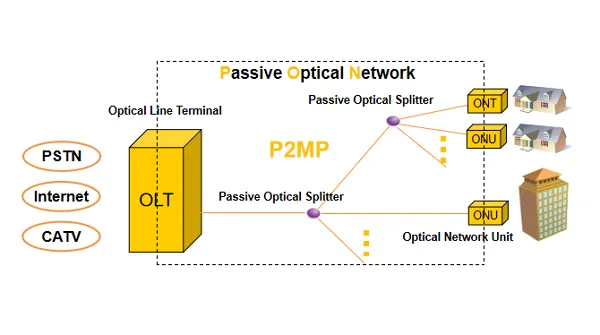
What Is a 4G/5G CPE Router?
A 4G/5G CPE router is a customer-premises networking device that uses a SIM card to access a cellular network and distributes internet connectivity through Wi-Fi and Ethernet.
Depending on the model, its key features may include:
-
4G LTE or 5G mobile network connectivity.
-
Wi-Fi connectivity for multiple devices.
-
Ethernet LAN ports for wired devices.
-
Ethernet WAN support for external broadband connections.
-
Dual-WAN or network failover functionality on supported models.
Unlike a traditional fiber router, a 4G/5G CPE can access the internet independently through a mobile network.
More importantly, models supporting Ethernet WAN can also connect to an existing FTTH ONT, creating opportunities for hybrid broadband deployment.
2. How Can 4G/5G CPE Routers Connect to FTTH Networks?
One of the most practical applications is connecting a 4G/5G CPE router to an existing FTTH network through an Ethernet WAN port.
The typical connection architecture is:
FTTH Fiber Network → ONT/ONU → Ethernet WAN → 4G/5G CPE Router → Wi-Fi and LAN Devices
In this configuration:
-
The FTTH connection provides the primary internet service.
-
The ONT converts the optical signal into an Ethernet connection.
-
An Ethernet cable connects the ONT to the WAN interface of a compatible 4G/5G CPE router.
-
The CPE router distributes the internet connection to smartphones, computers, smart TVs, IP cameras, and other devices.
Depending on the device and network configuration, the CPE can obtain its WAN connection through DHCP, PPPoE, or other supported methods.
The cellular module provides an additional internet access option through a 4G or 5G SIM card.
The key advantage is that one device can combine fixed broadband connectivity and mobile network access, provided the CPE supports the required WAN and cellular management functions.
3. Three Key Applications of 4G/5G CPE Routers in FTTH Networks
3.1 Fiber Broadband Backup: Keeping Businesses Connected
Internet interruptions can affect business operations, online transactions, cloud applications, and security systems.
Even though FTTH offers reliable broadband connectivity, fiber cuts, ONT failures, and network maintenance can occasionally interrupt service.
A 4G/5G CPE router with dual-WAN or automatic failover functionality can provide an alternative connection.
How does it work?
-
Primary WAN: FTTH broadband through the ONT.
-
Secondary WAN: 4G LTE or 5G connectivity through a SIM card.
-
Normal operation: Internet traffic uses the fiber connection.
-
Fiber failure: The router switches to the cellular connection if automatic failover is supported and properly configured.
-
Fiber recovery: The router can return to the primary connection according to its failback configuration.
This solution is particularly useful for:
-
Retail stores and supermarkets.
-
Restaurants and hotels.
-
Small and medium-sized businesses.
-
Offices using cloud-based applications.
-
IP surveillance and security systems.
-
Remote monitoring applications.
For these users, a cellular backup connection can help reduce downtime and improve business continuity.
3.2 Hybrid Broadband Connectivity: Combining Fiber and 5G
FTTH and 5G FWA are often viewed as competing broadband technologies. However, they can also complement each other.
FTTH provides a fixed, high-capacity broadband connection, while 5G offers wireless access without requiring an additional fiber installation at the customer premises.
A compatible 4G/5G CPE router can support both connection methods.
For example:
| Network Component | Function |
|---|---|
| FTTH | Primary fixed broadband connection |
| ONT/ONU | Converts optical signals into Ethernet |
| 5G CPE | Provides cellular internet access and local networking |
| Ethernet WAN | Connects the CPE to the FTTH network |
| SIM Card | Provides an alternative 4G/5G connection |
Depending on the CPE firmware, users may be able to configure:
-
Primary and backup WAN connections.
-
Automatic WAN failover.
-
Manual switching between fiber and cellular networks.
-
WAN connection monitoring.
Some advanced devices may also support load balancing, allowing traffic to be distributed across multiple WAN connections according to configured policies.
However, failover, load balancing, and simultaneous WAN operation are different functions. Their availability depends on the specific hardware and software capabilities of the CPE.
This hybrid approach provides more options for ISPs and network integrators developing flexible broadband solutions.
3.3 Flexible Broadband Deployment: Extending Connectivity Beyond Fiber
Although FTTH coverage continues to expand, fiber infrastructure is not equally accessible in every location.
Some residential communities, temporary offices, construction sites, and remote business locations may face challenges in obtaining fiber connections.
In these situations, 4G/5G CPE routers can provide an alternative broadband access solution.
For example:
-
In areas without FTTH coverage, a 4G/5G CPE can provide internet access directly through a SIM card.
-
In areas with FTTH coverage, a compatible CPE can connect to the fiber network through Ethernet WAN.
-
In temporary locations, cellular connectivity can provide broadband without waiting for fiber installation.
-
In locations requiring network redundancy, cellular connectivity can serve as a backup to fixed broadband.
This flexibility allows operators and service providers to offer different connectivity options according to local infrastructure and customer requirements.
4. FTTH Router vs. 4G/5G CPE Router: What Is the Difference?
Although both devices can provide Wi-Fi and Ethernet connectivity, their network access methods and applications are different.
| Feature | Traditional FTTH Router | 4G/5G CPE Router |
|---|---|---|
| Primary internet access | Fiber through ONT | 4G LTE / 5G cellular |
| SIM card | Usually not required | Required for cellular access |
| Ethernet WAN | Model dependent | Model dependent |
| Wi-Fi connectivity | Yes | Yes |
| Cellular backup | Usually requires additional equipment | Supported on compatible models |
| Standalone mobile broadband | No | Yes |
| Deployment flexibility | Depends on fiber availability | Can operate wherever suitable cellular coverage exists |
A traditional FTTH router is designed primarily for fixed broadband access.
A 4G/5G CPE router offers additional flexibility because it can use cellular connectivity independently and, on compatible models, connect to an existing fiber network through Ethernet WAN.
The two devices serve different purposes and can complement each other in hybrid networking environments.
5. Why Are 4G/5G CPE Routers Important for ISPs and Telecom Operators?
As broadband requirements continue to grow, operators need to consider more than just maximum internet speed.
Network reliability, service flexibility, deployment costs, and customer experience are also important.
Integrating 4G/5G CPE routers into FTTH service offerings can create several opportunities.
1. Improved Service Continuity
Cellular backup can help maintain internet access when the primary fiber connection fails.
2. More Flexible Broadband Packages
Operators can offer fiber broadband with optional 4G/5G backup services, creating additional value for business customers.
3. Reduced Dependence on a Single Access Network
Combining fixed and mobile connectivity provides another option when one network becomes unavailable.
4. Broader Market Opportunities
4G/5G CPE devices can serve customers in areas with different levels of fiber infrastructure coverage.
5. Product Differentiation
ISPs and telecom operators can develop differentiated broadband packages by combining fiber connectivity, cellular backup, and Wi-Fi services.
For distributors and networking brands, hybrid broadband equipment also creates opportunities to expand their product portfolios.
6. What Should You Consider When Choosing a 4G/5G CPE Router for FTTH Integration?
Not every 4G/5G CPE router can connect directly to an FTTH network. Before selecting a device, several technical factors should be evaluated.
Ethernet WAN Support
Check whether the device supports a dedicated WAN port or configurable LAN-to-WAN functionality.
A standard LAN port does not automatically support WAN operation.
Dual-WAN and Failover Capability
If the application requires automatic switching between fiber and cellular connectivity, confirm that the firmware supports WAN priority, connection monitoring, failover, and failback.
Cellular Network Compatibility
Check supported LTE or 5G frequency bands, network technologies, and SIM compatibility in the target market.
Wi-Fi Performance
Consider Wi-Fi 5 or Wi-Fi 6 capabilities, antenna design, wireless coverage, and the expected number of connected devices.
Ethernet Port Configuration
Evaluate the number and speed of LAN ports required for computers, IP cameras, POS systems, and other wired equipment.
Firmware and Network Management
For ISP and operator projects, additional requirements may include:
-
PPPoE and DHCP.
-
VLAN configuration.
-
Remote device management.
-
TR-069 or other supported management protocols.
-
Customized Web UI.
-
Network monitoring and diagnostics.
The final configuration should be verified against the operator's actual network architecture and technical requirements.
7. The Future of Hybrid Broadband: Fiber and 5G Working Together
The future of broadband connectivity is not necessarily about choosing between fiber and mobile networks.
Instead, different access technologies can work together to provide more flexible and reliable connectivity.
FTTH will continue to serve as an important fixed broadband infrastructure, while 4G LTE and 5G networks provide additional connectivity options.
With compatible Ethernet WAN, dual-WAN, and failover capabilities, 4G/5G CPE routers can become an important part of hybrid broadband solutions.
For telecom operators, ISPs, distributors, and networking brands, this creates new opportunities to deliver more flexible internet services and meet the changing needs of residential and business customers.
Conclusion
FTTH provides fast and stable fixed broadband, while 4G/5G CPE routers introduce additional flexibility through cellular connectivity.
When combined through compatible Ethernet WAN and network management functions, these technologies can support fiber backup, hybrid broadband access, and flexible network deployment.
Rather than replacing FTTH, 4G/5G CPE routers complement existing fiber infrastructure and help create more resilient broadband solutions.
SmileMBB specializes in 4G/5G CPE routers and MiFi devices, providing OEM/ODM product customization and manufacturing services for global telecom operators, distributors, and networking brands.
Looking for 4G/5G CPE solutions for your broadband project?
Contact SmileMBB to discuss your product requirements and explore potential cooperation opportunities.