By Alice Xie | 13 August 2026 | 0 Comments
5G and 6G Technical Breakdown: Industry Outlook & Wireless Terminal Buying Tips
The global fixed‑wireless‑access (FWA) market is booming, with 4G‑LTE & 5G CPE units, WiFi‑6 routers, signal repeaters and industrial‑grade modems dominating broadband infrastructure projects across emerging markets. At present, 5G technology has achieved large‑scale commercialization and acts as the mainstream backbone for modern mobile‑communication hardware sold by wholesale distributors, ISPs, system integrators and telecom project contractors worldwide. While our team keeps delivering mature, customizable 5G‑based wireless terminals, the whole telecommunication sector is carrying out deep‑going research, verification and pre‑standard exploration for the upcoming 6G network, whose commercial roll‑out is scheduled for around 2030.
To help our partners, hardware resellers and bulk buyers make sensible long‑term product roadmaps, we will break down every critical distinction between 5G and 6G, covering spectrum resources, core performance metrics, network frameworks, landmark technologies, intelligent capability, real‑world use‑cases, energy‑saving design and existing deployment obstacles.
1. Development Stage & Spectrum Resource
Fifth‑generation mobile networks have finished standard‑setting and wide‑range commercial deployment. Its radio‑spectrum resource mixes sub‑6‑GHz low‑mid bands and millimeter‑wave bands, striking a balanced compromise between broad signal coverage and high‑speed bandwidth capacity.
By contrast, 6G stays in the research‑driven pre‑commercial phase. Beyond existing millimeter‑wave frequencies, it will tap into the brand‑new sub‑terahertz and terahertz frequency bands to pursue far‑greater transmission bandwidth for next‑gen data‑heavy services.
2. Core‑Level Performance Benchmarks
Performance gaps stand out clearly when we compare the two‑generation cellular networks:
- Peak‑throughput Speed: 5G reaches a typical peak speed of 20 Gbps. The research target for 6G stretches from 100 Gbps all the way up to 1 Tbps, bringing revolutionary data‑transfer speed.
- End‑user Experience Rate: 5G already satisfies high‑definition streaming, cloud service and regular mobile‑broadband demands. 6G is engineered to deliver ultra‑stable high‑speed connections for resource‑hungry immersive business scenarios.
- Network Latency: Standard 5G delivers around 1‑millisecond latency. 6G chases sub‑millisecond latency to support time‑sensitive industrial control, remote‑operation machinery and low‑altitude drone networks.
- Device Connection Density: 5G can support roughly 1,000,000 linked devices per square kilometer. 6G’s upgraded system architecture accommodates denser massive‑IoT sensor groups for smart‑city and automated‑factory projects.
- Transmission Reliability: 5G’s URLLC specification supports ultra‑low‑latency, highly‑reliable industrial communication. 6G builds higher‑grade deterministic‑transmission performance for mission‑critical automated workflows.
- Position‑Sensing Capacity: 5G provides enhanced positioning functions for partial high‑precision location work. 6G realizes deep integration of wireless communication and environment sensing, achieving meter‑level or even finer‑grade positioning capability.
3. Network Architecture, Key Technologies and Intelligent Operation
The 5G network system relies on cloud‑native virtualization, flexible network slicing and mature edge‑computing frameworks. Its landmark technologies include Massive‑MIMO, beam‑shaping, edge‑computing deployment, eMBB, URLLC and mMTC. Artificial‑intelligence technology works only as an auxiliary tool for network maintenance and performance tuning.
6G adopts an AI‑native original network structure, unifying wireless communication, environment sensing, cloud computing and automated control. It supports air‑space‑ground‑sea integrated networking. Its cutting‑edge core techniques contain AI‑Native ISAC (Integrated Sensing and Communication), RIS reconfigurable‑intelligent surfaces, digital‑born network architecture, semantic‑based communication and joint sensing‑computation transmission. Full‑autonomous network self‑optimization, adaptive resource scheduling and native‑intelligent management will become built‑in properties of 6G infrastructure.
4. Commercial Application Scenarios
Current‑day 5G‑powered CPE, LTE routers and wireless modems fuel a broad spectrum of mature‑use industries: enhanced mobile broadband, industrial internet equipment, vehicle‑internet hardware, remote medical treatment, 4K‑8K high‑definition video streaming and smart‑parking & smart‑city zones.
When 6G matures, it will unlock immersive XR services, holographic real‑time communication, digital‑twin workshops, intelligent robot fleets, low‑altitude‑economy drone networks, air‑ground collaborative connectivity and ultra‑high‑accuracy positioning systems for sophisticated commercial‑industrial requirements.
5. Green Energy‑Saving Design and Existing Technical Obstacles
5G hardware and base‑station equipment keep optimizing power consumption and energy efficiency for long‑time outdoor operation. 6G prioritizes deep‑level carbon‑neutral deployment, system‑wide energy‑saving tuning and smart energy‑dispatching technology to lower the operational cost for large‑scale network operators.
As for deployment challenges, 5G construction meets hurdles including unstable millimeter‑wave coverage, high base‑station building expense and signal‑optimization inside complicated‑structure scenarios. The obstacles for 6G commercialization cover immature terahertz‑band hardware components, tricky signal‑propagation loss, unfinished industry‑wide standards, soaring network‑system complexity and lengthy commercial‑adaptation cycles.
Business Advice for Global Wireless‑Hardware Partners
Even though 6G draws widespread industry‑wide attention, mature 5G CPE, WiFi6 mesh routers, 4G‑LTE modems and FWA broadband terminals remain your most profitable, low‑risk mainstream commodities for overseas wholesale, ISP broadband projects and rural‑area fixed‑wireless‑access construction.
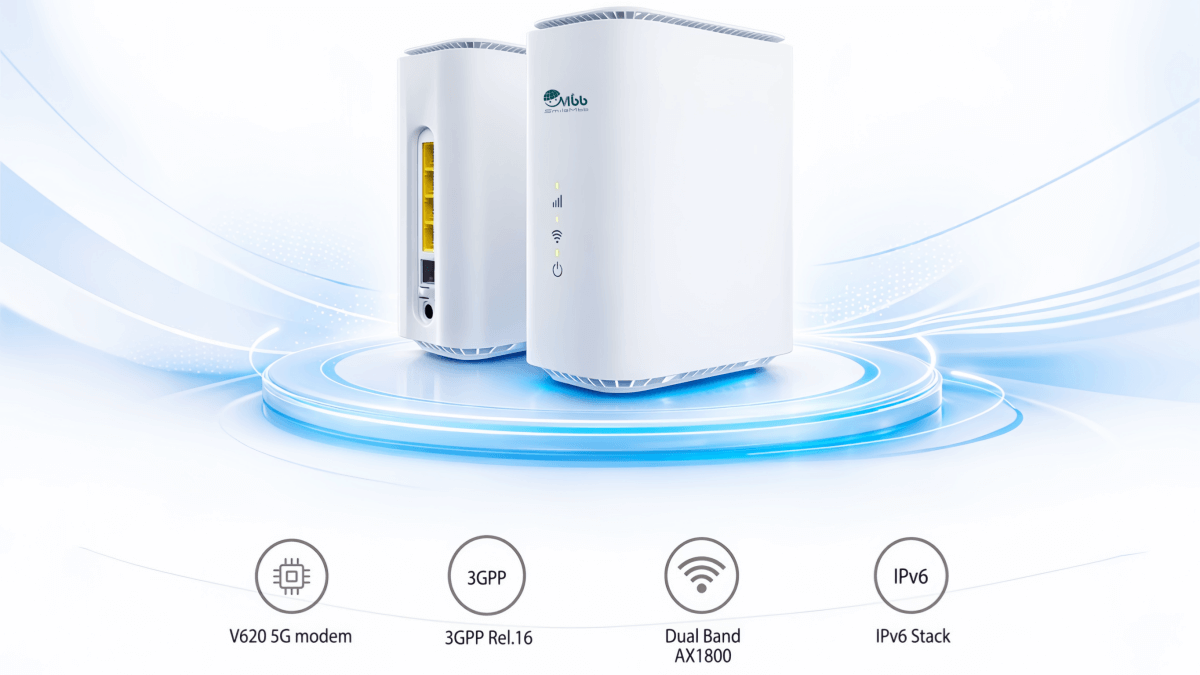
At smilembb.com, we supply customizable ODM & OEM wireless communication hardware covering 4G CAT.4/CAT.6 routers, high‑speed 5G CPE devices, WiFi‑6 signal boosters and industrial‑grade LTE modems for worldwide telecom buyers. Our engineering team keeps tracking 6G technical iterations to prepare our product pipeline for the next‑generation communication era.
Browse our official website smilembb.com to view our complete wireless‑hardware catalog and get tailored quotation support for your bulk‑order project.
Browse our official website smilembb.com to view our complete wireless‑hardware catalog and get tailored quotation support for your bulk‑order project.
Leave a Reply
Your email address will not be published.Required fields are marked. *